For patients suffering with hair loss, physicians must take into account the hair growth cycle, gender specific hair loss patterns, heredity, diet, and environmental factors like stress. Specialists will review each of these factors to better determine a treatment protocol that sets the patient up for success.
The Hair Cycle
The reason patients most often see thinning and experience significant balding is because at some point in their journey, the hair’s follicular cycle became disrupted, shortened and ultimately stopped producing hairs, a process referred to as miniaturization. This period of time is most crucial in developing an effective treatment plan. Though it is not impossible, most hair loss doesn't happen overnight, rather, it is a progression over time. When experiencing the early stages of thinning the hair follicle transitions or cycles through different phases (growing, resting, and shedding). The specialist's aim is to treat the follicle, not the hair. This is why it is important to fully understand the hair growth cycle.
The Hair Cycle Phases
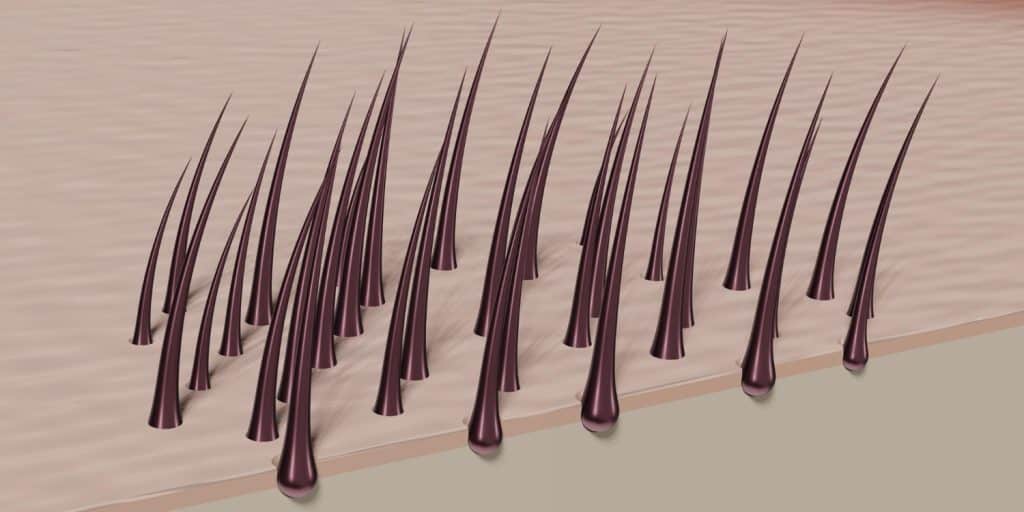
Hair follicles are tube-like structures that exist in the top two layers of the scalp, the epidermis and the dermis. Beneath these two layers lies the hypodermis, which serves to insulate the body, store energy, and connect skin to muscle and bone. Each person is born with over 5 million hair follicles. The average person sheds between 75 and 150 hairs per day. What most people refer to as “hair loss” is not the shedding, but rather the stunted growth of each recurring cycle. Each follicle on your head goes through four specific phases. As these phases progressively shorten with age, genetics, or other aforementioned causes, this is a critical time for intervention. Understanding these phases help us to determine how we can encourage the follicle into the desired growth cycle.
Anagen-Growing Phase
85% of the hairs on your head are in the growing phase, which lasts from two to six years at an average growth rate of 10 cm per year and a maximum lifetime length of one meter.
Catagen-Resting Phase
Once hair follicles leave the anagen phase, they enter a transitional phase, the Catagen Phase, for a period of up to two weeks. This phase involves shrinking of the follicle to around ⅙ of its normal length and affects 1-2% of the hair on your head at any given time.
Telogen-Shedding Phase
Following the catagen phase, each follicle enters the Telogen Phase for approximately five to six weeks. 10-15% of the hairs on your head are in the Telogen Phase at all times. During the Telogen Phase, hair remains on the head, while the dermal paella below the root enters a resting phase.
SmartGraft specialists work within each patient’s budget to create a customized treatment protocol that addresses their individual needs. The customized treatment protocol for each patient heavily relies on a transparent discussion and possibly pre-surgical testing ordered by your provider to identify any underlying hair loss conditions and disorders. Click on the links below to learn more about hair loss conditions and disorders that may be causing your hair loss.
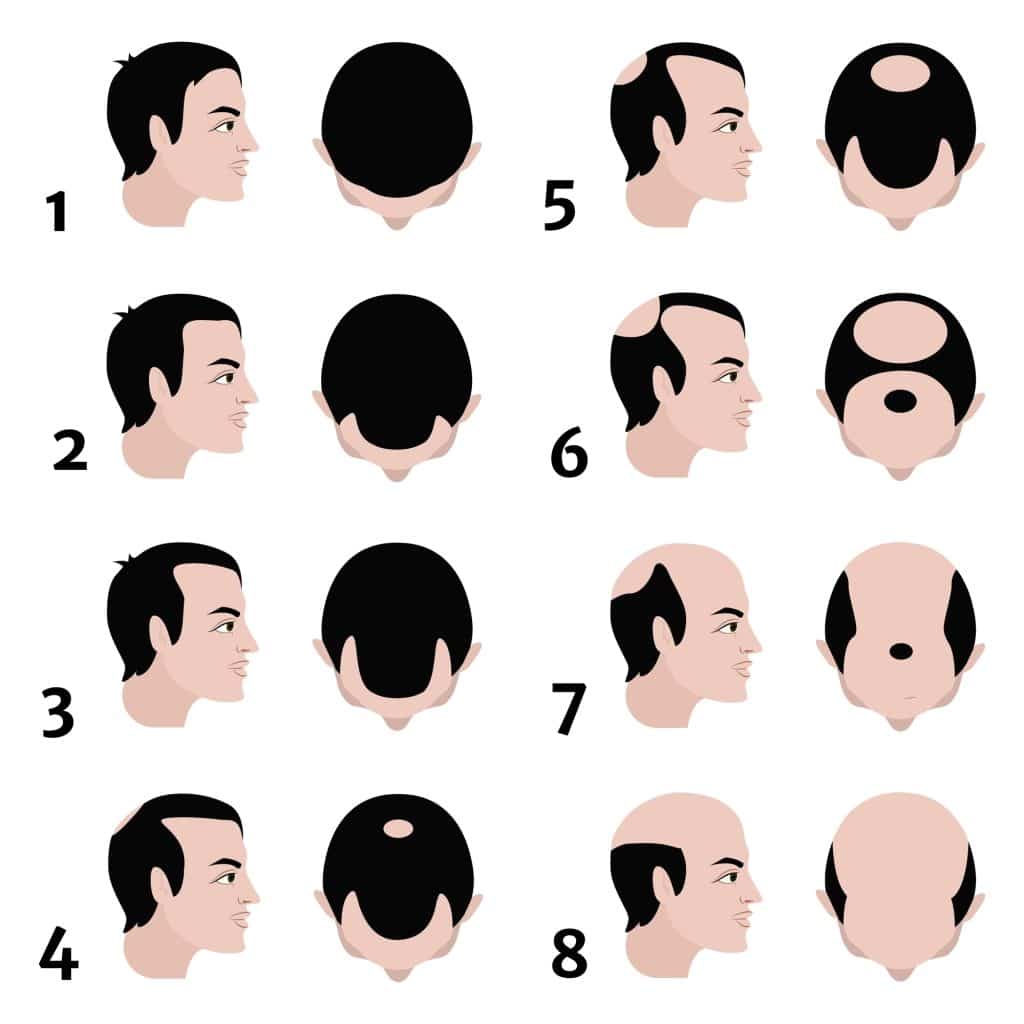
In 1975, Dr. O’Tar Norwood, a dermatologist and hair transplant surgeon, revised a series of hair loss classification in men. Today the Hamilton-Norwood scale classifies the stages of male pattern baldness using seven stages of hair loss. Treatment may include a combination of non-surgical and surgical therapies. In terms of hair restoration, a level two may require as few as 500 follicular units, whereas a level seven may require up to 6,000 over a series of several procedures. The number of grafts an individual needs to achieve optimal results varies and can be assessed and evaluated by a trained physician.
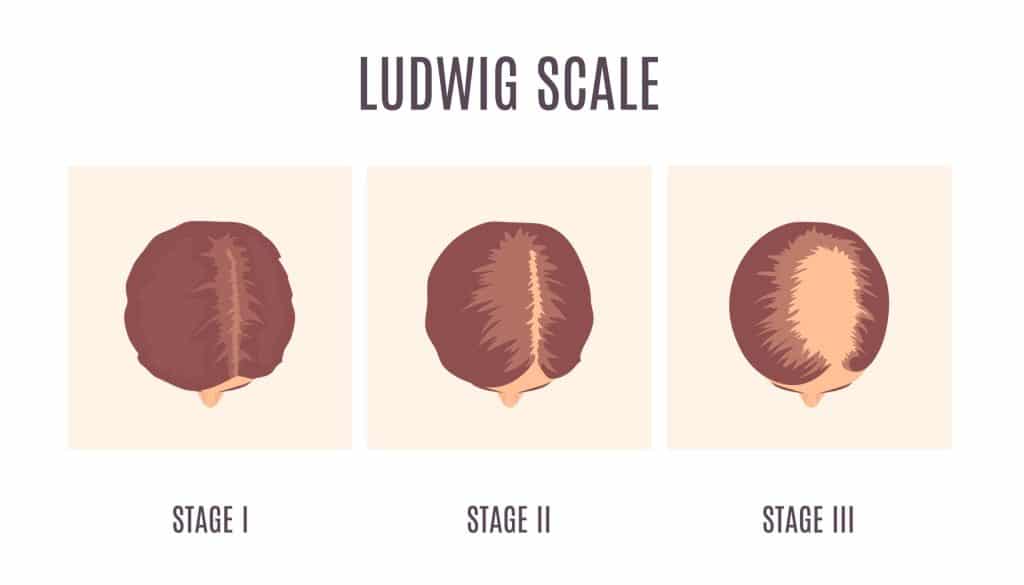
Today the Ludwig scale classifies the stages of female pattern baldness (androgenic alopecia) using three stages of hair loss. Treatment may include a combination of non-surgical and surgical therapies. In terms of hair restoration, a level 2 may require as few as 500 follicular units, whereas a higher level may require up to 6,000 over a series of several procedures. The number of grafts an individual needs to achieve optimal results varies and can be assessed and evaluated by a trained physician.